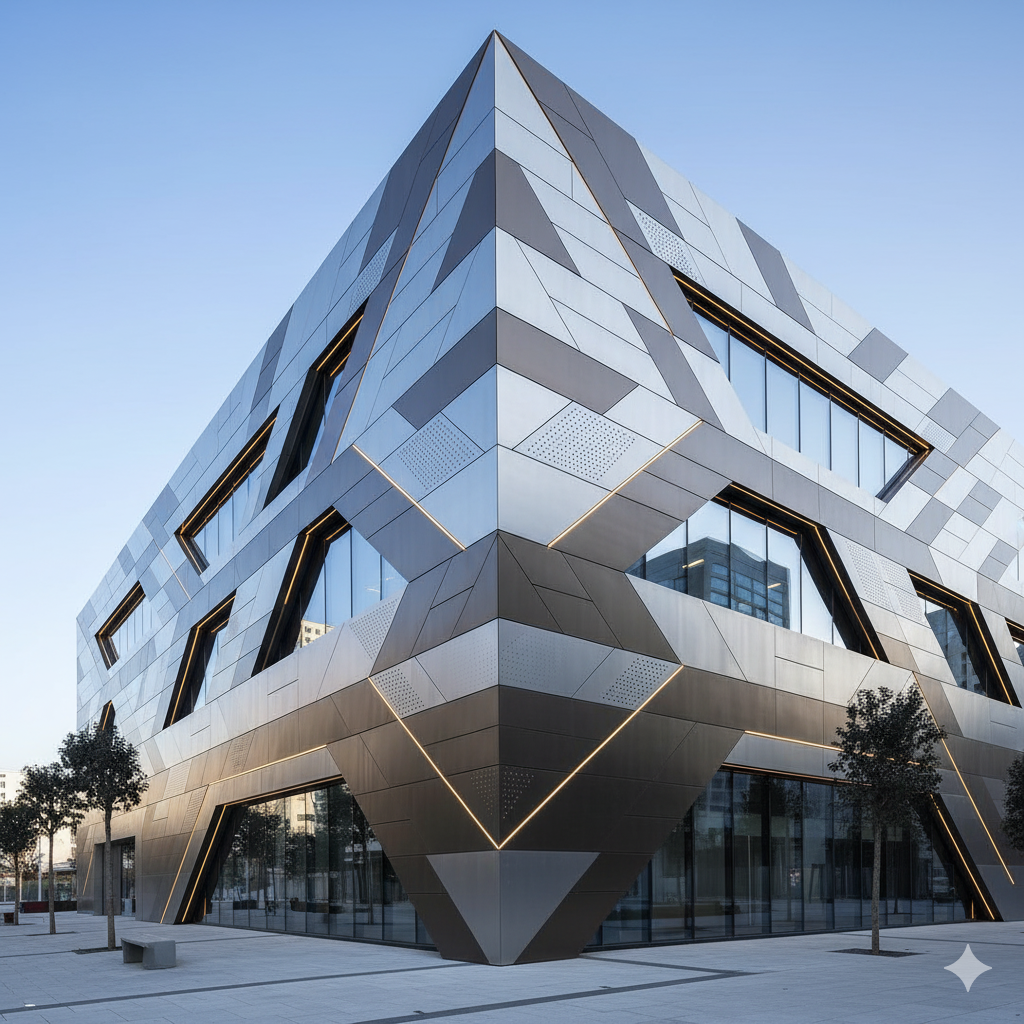
You can transform a building’s exterior with Aluminum Composite Material (ACM) panels without sacrificing durability or budget. ACM panels pair thin aluminum faces with a rigid core to deliver a lightweight, weather-resistant cladding that balances aesthetics, thermal performance, and ease of fabrication.
As you plan a facade, you’ll want clarity on panel types, core fire ratings, finishes, and how systems attach to a rainscreen or subframe. This article walks through what ACM panels are, how they perform in real-world installations, and what maintenance keeps them looking and functioning well so you can make a confident specification or purchase.
ACM Exterior Panels Overview
ACM exterior panels combine thin aluminum faces with a solid core to deliver lightweight, weather-resistant cladding that balances appearance, fire performance, and ease of installation. You’ll find options that prioritize fire resistance, thermal performance, or cost depending on your project needs.
What Are ACM Exterior Panels
ACM exterior panels consist of two thin aluminum skins bonded to a central core. The core can be polyethylene (PE) for cost-sensitive projects or a fire-rated (FR) mineral or thermoplastic core where code compliance and safety matter.
Panels typically come in standard thicknesses (e.g., 3–6 mm total panel thickness) and sheet sizes up to 4 × 8 ft or larger, with factory-applied PVDF or polyester coil coatings for UV and weather resistance. You’ll choose a finish—matte, anodized, metallic, or custom color—based on aesthetic and maintenance requirements. Fabrication includes cutting, folding, and routing for vents, anchors, and concealed fasteners.
Key Features and Advantages
ACM panels offer high strength-to-weight ratio, which reduces structural loads and simplifies installation. They resist corrosion and UV degradation when coated properly, lowering lifecycle maintenance compared with many metal or masonry systems.
Fire performance varies by core: FR cores meet stricter codes and reduce combustibility risk, while PE cores are lighter and less expensive but limited by code. Panels support large-format, seamless-looking façades and permit complex forms due to their flexibility. You’ll gain cost savings from faster installation, reduced substructure needs, and long intervals between repainting or repairs.
Common Applications
You’ll see ACM panels on commercial high-rises, retail storefronts, institutional buildings, and architectural feature walls. They suit curtain wall cladding, soffits, canopies, and signage where a sleek, consistent appearance matters.
Designers use ACM for rainscreen systems, often combined with pressure-equalized cavities and integrated drainage to manage moisture. In retrofit work, panels can overlay existing façades to update appearance and add thermal insulation without major demolition.
Design, Installation, and Maintenance
You will choose panel profiles, attachment systems, and ongoing care strategies that match climate, fire code, and aesthetic goals. Decisions about core type, finish, and installation method directly affect durability, maintenance frequency, and cost.
Panel Design Options
Select core type based on risk and performance: polyethylene (PE) cores for low-rise, budget projects; fire-rated mineral or FR cores where building codes require non-combustibility. Specify panel thickness (typically 3–6 mm for residential/commercial facades) and skin thickness (0.3–0.5 mm common) to balance rigidity and weight.
Choose finishes to meet UV and abrasion expectations. PVDF (fluoropolymer) coatings offer long-term color retention and chemical resistance; polyester is lower-cost but weathers faster. Consider textured or woodgrain laminates for specific aesthetics.
Plan panel size and joint details for thermal movement. Larger panels reduce joints but increase wind load and shipping constraints; typical module widths range 300–1500 mm. Include thermal breaks and allow 3–8 mm gaps for expansion, plus back-ventilated cavities if you need drainage and drying behind the cladding.
Installation Methods
You can install ACM panels using wet or dry systems; choose based on substrate, access, and performance needs. Dry systems (mechanical rails and clips) are common for exterior rainscreens, allowing fast installation and easy replacement of damaged panels. Wet systems use adhesives and are suitable for interiors or limited exterior conditions.
Follow these critical steps: verify substrate straightness and flatness within tolerance, install vertical aluminum rails or furring channels to manufacturer spacing, secure panels with specified fasteners or concealed clips, and seal perimeter joints with compatible gaskets or sealant. Remove protective film after final cleaning to avoid residue.
Address cold-climate practices: pre-drill and avoid over-torquing fasteners in low temperatures, store panels flat and dry, and allow materials to acclimate before fixing. Always adhere to the panel manufacturer’s installation manual and local building codes for wind load, fire, and anchorage details.
Maintenance Best Practices
Inspect panels twice a year and after severe storms. Look for loose fasteners, damaged edges, sealant failure, and coating abrasion. Early detection prevents moisture ingress and substrate damage.
Clean surfaces with a mild detergent solution and low-pressure rinse. Avoid harsh solvents and abrasive tools that strip coatings or scratch finishes. Remove protective film promptly after installation to prevent adhesive residue.
Repair small scratches or chips using manufacturer-recommended touch-up paints and edge sealants. Replace panels showing core exposure or significant deformation. Keep documentation: record panel type, finish code, fastener pattern, and maintenance dates to streamline future repairs and warranty claims.